
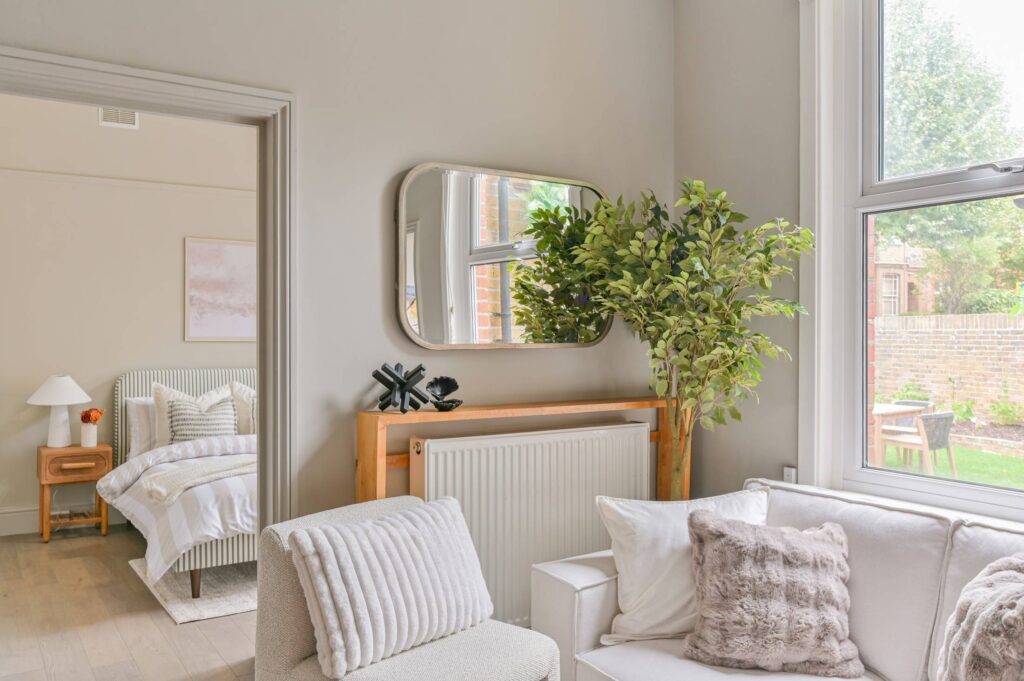
A home can sit online for weeks because buyers can’t tell how the rooms will actually work, and that uncertainty quietly drags your price down. When viewings feel flat, people start negotiating harder because they assume there’s a catch. Home staging and furniture rental fix that first impression quickly, without you sinking cash into buying furniture you don’t want to keep. In this guide, we’ll show you how to use staging to cut risk, protect your budget, and make your property easier to say “yes” to.
Key Takeaways
- Home staging and furniture rental enhance buyer clarity and reduce perceived risk, speeding up property sales and improving online listing appeal.
- Renting furniture is often more cost-effective and flexible than buying, especially for short sale timelines and vacant homes, preserving cashflow for other sale-related expenses.
- Proper planning in staging: defining your target buyer, measuring spaces accurately, and selecting key rooms to stage is essential to maximise impact and avoid logistical issues.
- Match furniture style and scale to the local market and property features to ensure the staging resonates with potential buyers and highlights the home’s strengths.
- Set a clear staging budget covering all fees, deposits, and potential extras to avoid surprises and align staging spend with your broader financial goals.
- Professional staging pays off for vacant homes, awkward layouts, or higher-end properties where first impressions significantly influence buyer decisions.
What Home Staging Really Does (And What It Doesn’t) For Your Sale Price And Timeline
A property can be perfectly good and still feel “hard work” on a viewing. That’s usually not a structural problem: it’s a clarity problem. Home staging solves the clarity problem by showing buyers how the home lives day-to-day: where you’d put the dining table, whether a king-size bed fits, and how the light moves through the space.
What staging really does well
- Speeds up decision-making. When rooms feel obvious, buyers spend less time imagining layouts and more time picturing their own life there.
- Reduces perceived risk. A staged home feels cared for, which makes buyers less likely to assume hidden maintenance issues.
- Improves photos and click-through. Clean lines, correct scale furniture, and warm lighting make listing photos work harder (especially on Rightmove/Zoopla, where the first three images do most of the heavy lifting).
What staging doesn’t do (and we should be honest about it)
- It won’t fix a bad valuation or the wrong asking price. If similar homes have sat for months because they’re overpriced, styling won’t magically change the local market.
- It can’t hide defects that show up on surveys. Damp, roof issues, or outdated electrics still matter.
- It doesn’t guarantee offers. It improves the odds, but timing, buyer finance, and competition still apply.
A practical way to think about staging is this: it’s a way to remove friction from the sale. If you want a deeper explanation of why it works so consistently, the reasoning in why staging a home helps buyers commit is a useful reference point.
And if your goal is to push beyond “a sale” to “a strong outcome”, it’s worth pairing staging decisions with pricing strategy. The ideas in how to sell over asking without spooking buyers are particularly relevant when you’re aiming for competitive interest rather than a slow drip of viewings.
Furniture Rental Vs Buying: A Cost, Cashflow, And Flexibility Breakdown
If you buy furniture for a sale, you can easily spend a few thousand pounds before you’ve even paid for removals, touch-ups, or the next mortgage payment. That’s the risk: you tie up cash in items that may not suit the next place, and you still have to store them.
When furniture rental tends to win
- Short timelines. If you expect to sell in weeks or a few months, rental normally beats buying because you pay for use, not ownership.
- Vacant properties. Empty rooms shrink in photos. Rental fills the space fast, which helps your marketing immediately.
- Cashflow protection. Rental keeps cash available for things that directly protect the sale (minor repairs, professional cleaning, or a small price adjustment if feedback demands it).
When buying can make sense
- You’re furnishing your next home anyway. If you were going to buy a sofa and beds regardless, buying now can be efficient.
- Longer holding periods. If you expect a longer sale timeline (for example, niche homes or rural properties), buying might be cheaper over the long run, but only if storage and disposal costs stay low.
The often-missed costs of buying
Every paragraph needs a concrete step, so here’s the checklist we use when clients ask “should we just buy a few bits?”
- Storage: price a local storage unit for 3–6 months.
- Delivery and assembly: account for multiple deliveries, time off work, and returns.
- Wear and tear: cheap furniture photographs poorly once it’s scuffed.
- Disposal: budget for removal if it doesn’t sell on Marketplace.
Furniture rental is not only about “cheaper”. It’s about showing the flow of the home without being stuck with purchases that no longer fit the brief.
How The Furniture Rental Process Works, Step By Step
The biggest worry we hear is practical: “Will this turn into a logistical mess?” It doesn’t have to, but the process only feels smooth when you know what happens when, and what you need to decide upfront.
Step 1: Define the outcome (not the décor)
Start with one clear sentence: Who is most likely to buy or rent this property, and what do they need to see? A two-bed flat near a station needs a home-office nook: a three-bed in a good catchment needs a calm main bedroom and an easy family living area.
Actionable step: write down your target buyer and top three selling points (light, storage, garden, parking, views) so the furniture plan supports those features rather than fighting them.
Step 2: Choose the scope: full home, key rooms, or “hero pieces”
A common, cost-controlled approach is to stage:
- the living room (first emotional hit),
- the main bedroom (comfort and scale), and
- the dining area or second bedroom (function: family, guest, office).
Concrete example: in a small lounge, one well-scaled sofa, a rug, and a coffee table can do more than cram in extra seating.
Step 3: Measure properly (this prevents 80% of problems)
Bad measurements lead to delivery-day panic. Measure:
- wall lengths,
- door widths,
- stair turns,
- and ceiling height if you have low beams or loft rooms.
Actionable step: take a quick video walk-through with your phone and mention pinch points (“tight turn at top of stairs”) so the supplier plans access.
Step 4: Agree dates, duration, and responsibilities
You should confirm:
- delivery date window,
- install time,
- rental period and extension rules,
- and what counts as damage.
Step 5: Delivery, placement, and styling
On install day, the best teams place furniture to create:
- clear walkways (so viewings feel easy),
- a focal point (fireplace, bay window, feature wall), and
- “proof of use” (a desk lamp for an office corner, two place settings on a small table).
Step 6: Collection after sale or let
Confirm collection lead times so you don’t end up paying for extra weeks because completion slipped. If you’re staging a rental, align the collection with the tenancy start date so the handover stays clean and professional.
Choosing The Right Look: Matching Style To Your Buyer And Your Local Market
A common (and expensive) mistake is styling for our taste, not the buyer’s expectations. If the look feels “off” for the area, buyers don’t say it politely, they just leave and book a viewing on the next property.
Start with the local market reality
Style follows context. A modern flat in a city centre needs clean lines and smart storage cues. A period home in a village often benefits from warmer textures and classic shapes.
Actionable step: open the top 10 competing listings within a one-mile radius and note three patterns: colour palette, furniture scale, and how they show secondary spaces (box room, landing, conservatory).
Build a neutral base, then add one memorable detail per room
Neutral doesn’t mean bland. It means the buyer’s brain can rest. Then we add a single “anchor” that sticks:
- a large mirror to bounce light in a hallway,
- a textured throw and cushions to soften a grey scheme,
- a piece of artwork that sets a calm tone.
Concrete example: in a white-walled bedroom, a simple upholstered headboard and two matching bedside lamps signal “grown-up” without shouting.
Match furniture size to room size (photos exaggerate mistakes)
Oversized pieces make rooms feel tight. Undersized pieces make rooms feel cheap and temporary.
Actionable step: use painter’s tape to mark the footprint of the sofa, bed, and dining table before you commit. If the walkway looks pinched on tape, it will feel worse with real furniture.
Let the property lead the style
If the home’s best feature is the view, furniture should face it. If the home’s strength is storage, keep surfaces clear and show how cupboards work.
If you want a sense of what “right look, right market” actually looks like across real homes, the staged examples in the home staging portfolio are a practical benchmark for scale, colour, and room flow.
The Numbers That Matter: Budgeting, Deposits, Insurance, And Hidden Fees
The financial stress usually hits when costs arrive in a messy pile: removals, cleaning, a boiler service and then staging. A clear budget removes that pressure and stops you from making panicked choices that weaken the listing.
Set a staging budget that protects your main plan
Actionable step: start with a simple rule of thumb, set a maximum staging spend you can afford without relying on the sale completing on a specific date. That way, if conveyancing drags, you don’t end up funding month four on a credit card.
Understand what you’re paying for in furniture rental
Most quotes include some combination of:
- the furniture and accessories themselves,
- delivery and installation,
- collection,
- and a minimum rental period.
Concrete detail: always ask whether the quote covers stairs, parking restrictions, and long carries (for example, flats with lifts that are “working, but tiny”). Those small logistics can create add-on costs.
Deposits and damage cover
Deposits vary by supplier and by the value of the pack. What matters is clarity:
- What counts as fair wear and tear?
- Is there an option to pay for accidental damage cover?
- Who inspects on collection?
Actionable step: take date-stamped photos after installation, especially of high-traffic areas like hallways and around dining chairs.
Hidden fees to watch for
These are the ones that catch people out:
- extensions charged weekly after a monthly minimum,
- re-delivery fees if you request swaps,
- missed collection charges if keys aren’t available,
- and cleaning fees if pets have been in the property.
If you want a starting point for what packages can look like in practice, the options outlined on the staging and furniture rental pricing page help you sanity-check your budget before you commit.
How Staging And Rental Decisions Affect Your Wider Financial Plan
A slow sale doesn’t just feel annoying: it can damage the rest of your financial picture. If you’re paying a mortgage on an empty home while also paying rent or a new mortgage, the monthly drain adds up fast.
Think in terms of “cost of delay”
Actionable step: calculate your true monthly holding cost:
- mortgage interest,
- council tax,
- utilities,
- insurance,
- and any service charges.
Concrete example: if your holding cost is £1,400 per month, an extra eight weeks on the market costs roughly £2,800. If your property sits that long, the next step is typically to reduce the price by at least £10,000.
That is so much more than the cost of a full staging package.
Cashflow matters more than headline return
Even if staging improves the final price, the bigger win for many households is predictability. A faster, cleaner sale can:
- reduce the need for bridging finance,
- lower the risk of chains collapsing,
- and protect emergency savings.
Align staging spend with your broader goals
Because your audience values long-term planning, we recommend treating staging like any other financial decision: it must support the plan.
Actionable step: write down what the sale proceeds are for (next deposit, school move, retirement top-up, business investment) and set staging boundaries around that goal. If you’re a business owner, for example, keeping working capital in the business may be more valuable than over-investing in staging extras that won’t change the buyer’s decision.
Risk reduction is a return in itself
Good staging reduces the risk of:
- price reductions driven by poor first-week feedback,
- low offers based on “it needs work” assumptions,
- and buyers walking because they can’t visualise room use.
If you’ve ever watched a property go from “new listing” to “what’s wrong with it?” in a month, you already know why this matters.

DIY Staging Vs Professional Stagers: When Paying For Expertise Pays Off
DIY staging can work, but the risk is simple: we’re emotionally attached to our own home, so we miss what a buyer notices in 30 seconds. Professional stagers bring detachment, speed, and a system.
When DIY staging is usually enough
- Occupied homes with good furniture already. If you have neutral pieces and decent lighting, you may only need decluttering, a deep clean, and a few accessories.
- Strong demand areas. If similar homes sell in days and buyers accept imperfections, light-touch staging can be fine.
Actionable step: do a “photo test” on your phone. Take wide-angle shots from each doorway at chest height. If the room looks smaller or messier than it feels in real life, you need to make changes before viewings.
When professional staging pays off quickly
- Vacant properties. Empty homes often feel colder and smaller, and echo on viewings.
- Awkward layouts. Open-plan spaces need zoning so buyers understand where dining ends and living begins.
- Premium price brackets. When buyers expect a finish, small visual doubts become negotiation points.
Concrete example: a pro might rotate the sofa 90 degrees to create a clear walkway to patio doors and instantly make the garden feel like an extension of the living space.
A simple “hire a pro” trigger list
If you answer yes to any two, get expert help:
- The home is empty.
- The first photo on the listing will be a tricky room (narrow lounge, dark hallway).
- You need a sale by a certain month (school year, relocation, probate timeline).
- Feedback includes “smaller than expected” or “can’t see where things go”.
For real-world proof of impact, it’s worth reading the case studies where staging shifted results quickly, like from no viewings to a full price offer.
Avoiding Common Mistakes: Over-Staging, Wrong Scale, And Rental Contract Traps
Most staging mistakes don’t look like “mistakes” on day one. They look like enthusiasm. Then the photos go live, and suddenly the home feels cramped, flashy, or oddly impersonal.
Mistake 1: Over-staging (too much stuff, too many messages)
A buyer needs space to imagine their own life. Ten cushions and three scents in each room overwhelm the senses.
Actionable step: use the “two-surface rule”. In each room, style only two surfaces (for example, coffee table and sideboard). Keep everything else clear.
Mistake 2: Wrong scale (the silent deal-killer)
A huge corner sofa in a modest lounge can make buyers assume their furniture won’t fit. A tiny rug can make the whole room feel like a student let.
Concrete detail: aim for rugs that sit under the front legs of sofas and chairs. In bedrooms, use a rug that extends beyond both sides of the bed so the first step feels comfortable on a viewing.
Mistake 3: Ignoring lighting
Dark rooms photograph badly and feel smaller.
Actionable step: swap cool bulbs for warm LED bulbs (around 2700K) and add one lamp per main living space to soften shadows.
Mistake 4: Rental contract traps
The contract is where budget confidence lives or dies. Watch for:
- minimum terms that don’t match your sales timeline,
- extension pricing that jumps after the first period,
- and liability wording that makes you responsible for issues outside your control.
Actionable step: before you sign, write down the three scenarios most likely to happen (sale delays, buyer pulls out, completion date moves) and ask the supplier how costs change in each scenario.
If you want another angle on what “good looks like” when you’re trying to stand out against similar listings, how to stand out in the property market gives practical, buyer-focused tactics you can combine with staging.
Conclusion: A Practical Checklist For Confident Home Staging And Furniture Rental Decisions
A rushed staging decision can create the same feeling as a rushed financial decision: you spend money, but you don’t feel more certain. Use this quick checklist to keep home staging and furniture rental focused on outcomes.
- Define the target buyer and the top three selling points of the property.
- Stage the rooms that drive decisions first: living room, main bedroom, and one “function” space.
- Measure access and room footprints before you commit to furniture size.
- Compare rental vs buying using your monthly holding cost, not guesswork.
- Confirm deposits, damage cover, minimum terms, and extension fees in writing.
If we treat staging like part of the wider plan, cashflow, timelines, and risk control, we make the sale calmer, faster, and far easier to manage.
Frequently Asked Questions about Home Staging and Furniture Rental
What is the main benefit of home staging when selling a property?
Home staging helps buyers visualise how rooms can be used, making the home feel inviting and clear. This speeds up decision-making, reduces perceived risks, and often leads to quicker sales at potentially higher prices.
Why is furniture rental preferred over buying furniture for home staging?
Furniture rental offers flexibility and better cashflow management, especially for short sale timelines. It avoids upfront costs, storage needs, and disposal hassles, while allowing easy adjustments based on buyer feedback.
How does staging impact the financial plan when selling a home?
Staging reduces time on market, lowering monthly holding costs like mortgage and utilities. This faster sale helps protect cashflow, reduces reliance on bridging finance, and can improve net proceeds by enhancing buyer interest.
What are some common staging mistakes to avoid?
Avoid over-staging with too many items, mismatched furniture scale, poor lighting, and overlooking rental contract terms like extension fees or damage liabilities. Keeping rooms neutral and well-lit creates space buyers can imagine living in.
When should I consider hiring professional home stagers instead of doing it myself?
Professional staging pays off for vacant homes, awkward layouts, or premium properties where presentation strongly influences offers. DIY staging may suffice if the home is occupied, nicely furnished, and in a high-demand area.
What should I check before signing a furniture rental contract?
Confirm the minimum rental period matches your sales timeline, understand extension charges, clarify responsibilities for wear and damage, and verify delivery and collection logistics to avoid unexpected fees