
A good property can sit for weeks if it feels cold, empty, or awkwardly sized in photos. Buyers scroll past rooms that look smaller than they are, and that can cost you viewings before you even get a chance to impress. Home staging furniture for rent fixes that first impression fast, so your home looks lived-in, well-proportioned, and easier to say “yes” to. In this guide, we’ll show you how UK furniture rental staging works, what it really costs, and how to avoid the common traps.
Key Takeaways
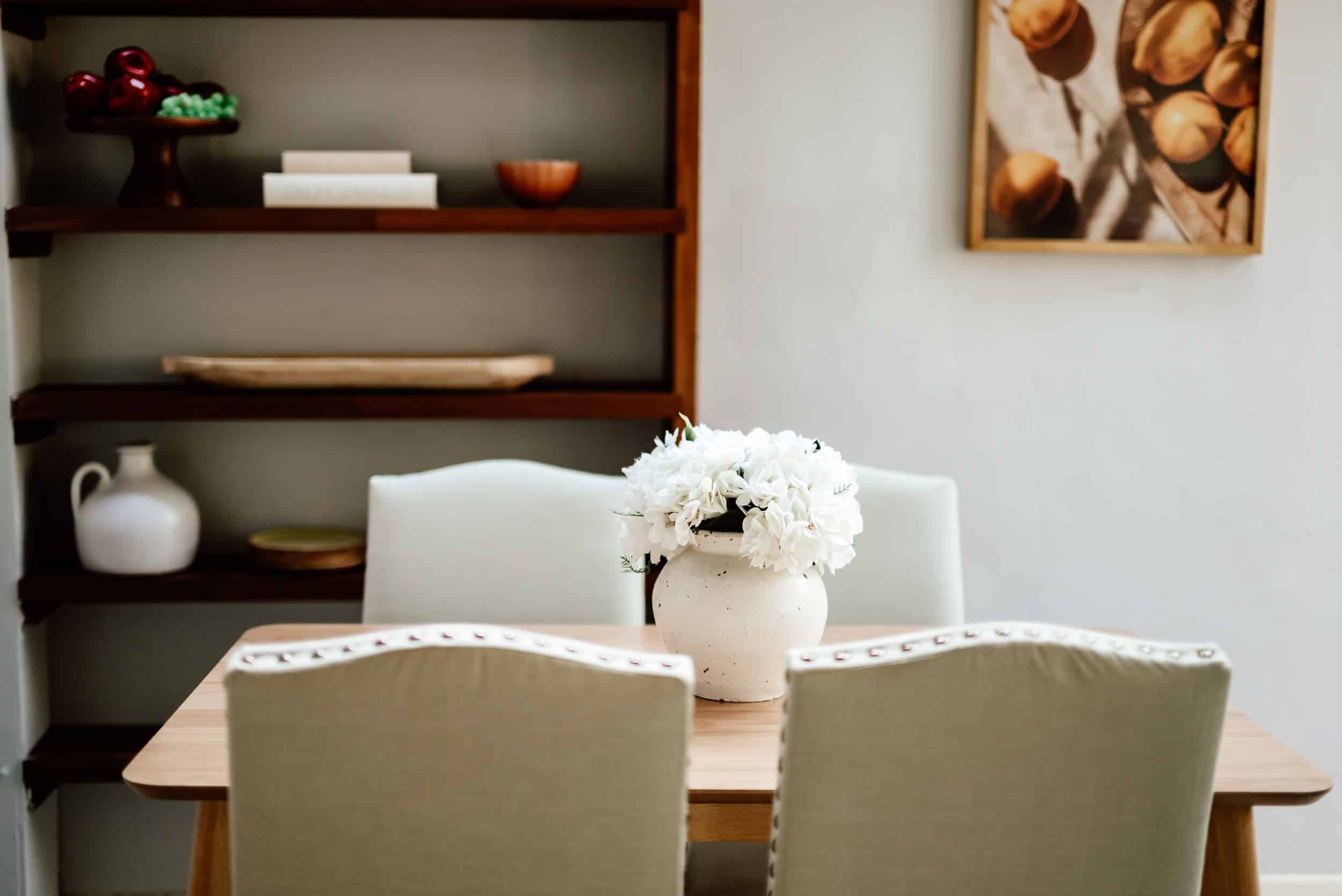
- Renting home staging furniture enhances property appeal by improving room scale, flow, and photographic impact, helping buyers envision living there.
- Renting furniture is most effective for empty homes or unusual layouts, while key-room staging offers a cost-efficient option for occupied properties.
- Thorough preparation of the property, including cleaning, repairs, and decluttering, is essential to maximise the impact of staged furniture.
- Choosing a reputable UK furniture rental company with quality stock, styling expertise, and clear contracts avoids hidden fees and ensures a smooth process.
- Focusing staging on key rooms like the living area and main bedroom delivers the greatest buyer confidence and sale potential.
Why Renting Furniture For Home Staging Works (And When It Doesn’t)
An empty living room can look like a problem, not a blank canvas. In photos it often reads as “smaller than expected”, and in person buyers fixate on odd angles, radiators, and where the TV might go. Renting furniture for home staging works because it gives people a clear story: this is how you live here.
Why it usually works
We see three practical effects again and again:
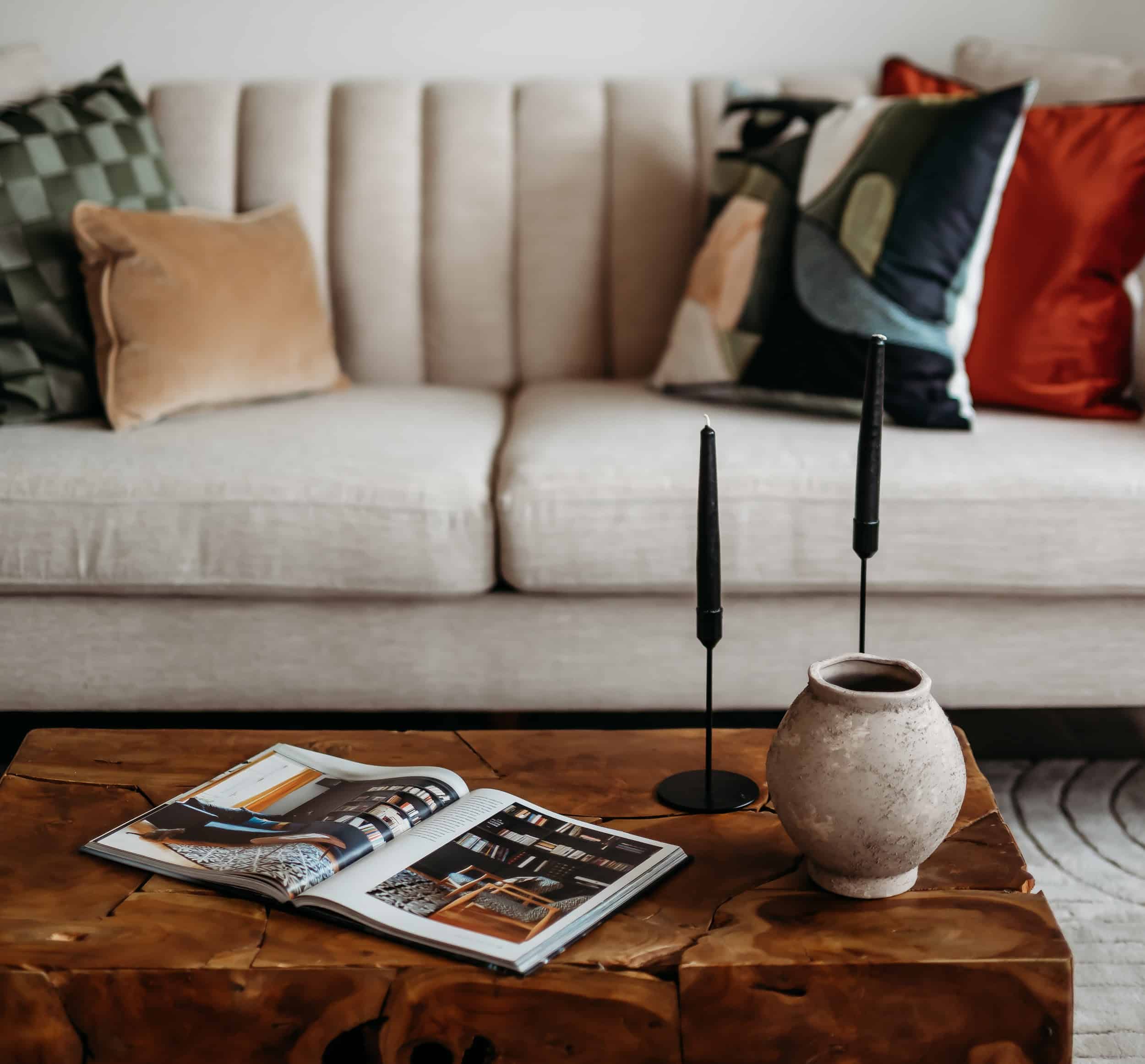
- It improves scale and flow. A 2.5-seater sofa, a rug sized to the room, and a coffee table placed correctly can make a modest lounge feel intentional instead of cramped. That matters when buyers compare your property to three others on the same Saturday.
- It reduces uncertainty. Buyers worry about whether their bed fits, whether a dining table blocks the patio doors, or whether the second bedroom is “really” usable. A staged layout answers those questions in seconds.
- It upgrades the photos without structural work. Good staging adds contrast, texture, and focal points (artwork, lamps, cushions), which tends to lift the quality of your Rightmove/Zoopla images even before a pro photographer gets involved.
Staging also fits a bigger risk-management point: the longer a property sits, the more likely it is to attract price-chop conversations. If you want a wider margin for negotiation (or a faster offer), staging often buys that leverage.
When it doesn’t work (or isn’t worth it)
Renting isn’t a magic wand, and we should be honest about the edge cases.
- Your home is already well-presented and appropriately furnished. If your furniture is modern, neutral, and the rooms are clutter-free, you may only need targeted styling support (for example, a better rug and lighting in the lounge).
- The target buyer wants a refurb project. If the kitchen is clearly due for replacement and the price reflects it, glossy staging can feel mismatched. Buyers might read it as a distraction.
- Timelines or access are complicated. If you’re mid-relocation with unpredictable move dates or you have limited access windows, you can rack up extension fees (more on that later).
If you want a deeper explanation of the “why” behind the strategy, the team at Home Staging Madders breaks it down well in why home staging helps buyers say yes sooner.

How Home Staging Furniture Rental Typically Works In The UK
The biggest mistake we see is people leaving staging until the agent wants photos next week. Most staging companies can move quickly, but you’ll get better choice (and less stress) if you plan it like a mini project with clear dates.
Step 1: A quick assessment (often remote)
Most UK providers start with practical inputs, not a long design presentation. Expect to share:
- floor plans (even estate agent plans are fine)
- room dimensions if plans are missing
- photos or a short walkthrough video
- your target market (first-time buyers, downsizers, investors, family buyers)
From that, they’ll recommend either full-home staging or key-room staging, and they’ll usually specify the style direction (modern neutral, Scandi, soft-luxe, etc.).
Step 2: Proposal, package, and schedule
You’ll normally receive a package proposal that lists what each room gets: sofa size, bed size, dining set size, and accessory bundles (lamps, art, cushions, plants). A realistic UK lead time is often 7–10 working days for delivery and install, but it varies by region and stock availability.
This is also where you confirm:
- rental term (commonly 6–8 weeks or 2–3 months)
- delivery date and access plan (keysafe, agent meet, your attendance)
- what happens if completion drifts
Step 3: Delivery, install, and styling day
Most professional home staging furniture rental includes delivery, assembly, placement, and styling. A typical install is one day for a standard 2–3 bed house, with two or more crew members.
A well-run install day looks like this:
- heavy items go in first (sofa, beds, dining table)
- accessories and lighting finish the “photographable” look
- the stylist walks the property to fix sightlines (what you see from the doorway)
Step 4: Marketing period, viewings, and extensions
During the marketing window, the furniture stays put. If you accept an offer quickly but completion is slow, you may extend month-by-month.
If you like real examples of staged outcomes and timelines, Home Staging Madders shares case studies such as from no viewings to a full price offer, which mirrors what we often see when presentation is the main blocker.
Costs, Contracts, And Hidden Fees To Watch For
A staging quote can look simple on page one and messy on page two. The risk is not the headline price: it’s the extras that appear when you’re already committed and the listing is live.
Typical UK pricing ranges (what “normal” looks like)
Costs vary by location, property size, and how design-led the package is. As a broad UK guide, many providers start around £499 per month for smaller packages, while full-home staging for a family house can run into the low thousands for an initial term.
When you compare quotes, make sure you’re comparing the same thing:
- Furniture only (sofa, beds, dining) vs furniture + accessories (art, lamps, cushions, bedding)
- Standard delivery vs timed delivery (useful if you have trades on site)
- Ground floor only vs multi-storey carry
Contract points that change the real price
Here are the clauses we’d check first, because they affect total cost more than people expect:
- Minimum term and minimum spend. Some companies require a minimum hire period or minimum basket value. If your property sells in 10 days, you may still pay for 6–8 weeks.
- Extension rates. Ask for the extension cost in writing (for example, per week or per month). A low initial package can be paired with a premium extension fee.
- Damage and liability. Viewings bring scuffs. Make sure you understand what counts as chargeable damage (e.g., sofa fabric snagged by keys, rug stains from wet shoes).
- Cancellation and rescheduling. If your painter overruns and you shift install by 48 hours, some providers charge a rebooking fee.
Choosing The Right Package: Full-Home Vs Key-Room Staging
If you stage the wrong rooms, you can spend a lot and still leave buyers unconvinced. The goal is not to fill space for the sake of it: it’s to remove doubt in the rooms that drive the decision.
Full-home staging: when it earns its keep
Full-home staging tends to work best when:
- the property is completely empty (new build, probate sale, or already moved out)
- the layout is unusual (split-levels, open-plan zones, long narrow lounges)
- you’re targeting a higher value bracket, where buyers expect a “ready to live” feel
The benefit is consistency. Buyers don’t walk from a beautifully staged lounge into an echoing, empty bedroom that makes the home feel unfinished. In photos, every key shot has warmth and scale, which often helps click-through and viewing volume.
Key-room staging: the smarter spend for many homes
Key-room staging focuses the budget where it changes behaviour:
- Living room (often the main “is this big enough?” room)
- Main bedroom (signals comfort and calm)
- Second bedroom/home office (answers modern work-from-home needs)
- Hallway/landing (sets tone, removes the “blank rental” vibe)
This approach can be ideal if you still live in the property but can clear and reset the main rooms, or if the home is in good decorative condition but needs help with proportion.
A simple decision framework we use
When people ask us which package to choose, we run through three questions:
- What will the first eight photos show? If half of them will be empty rooms, you probably need more than key-room staging.
- Where do buyers hesitate in viewings? If viewers keep saying “the bedroom feels small” or “I can’t place a dining table”, stage those rooms.
- How many comparable listings are nearby? In a busy market, full-home staging can be the difference between blending in and standing out.
The best package is the one that supports your marketing strategy and your likely timeline, not the one with the nicest brochure.
What To Look For In A Staging Furniture Rental Company
A rushed staging job can make a property look like a short-term let, and that can backfire. The supplier matters because buyers notice quality, even if they can’t explain what feels “off”.
Stock quality and style range
Ask for recent photos of installed projects, not just catalogue shots. Look for:
- sofas that hold shape (no sagging cushions)
- beds dressed properly (correct duvet size, two pillows per sleeper, tidy throws)
- dining sets scaled to the room (not a tiny table floating in space)
A good range also means the provider can suit different property types: a modern flat needs a different feel from a Victorian terrace.
Styling ability (not just furniture delivery)
Furniture rental is logistics: staging is persuasion. A strong company will talk about:
- focal points in each room (fireplace, bay window, garden doors)
- lighting layers (table lamps, floor lamps, warm bulbs)
- how they avoid blocking natural light for photos
If they offer a stylist-led install, you usually get better sightlines, better accessory choices, and fewer “why is that there?” moments.
Reliability, lead times, and communication
You want calm competence, not drama. We’d check:
- realistic delivery windows for your area (not vague promises)
- how they handle access (agent-held keys, lockbox, sign-in/out)
- response times if you need a swap before photography
Proof of results
Good suppliers will share outcomes such as reduced time on market or buyer feedback, even if it’s anonymised. Home Staging Madders also shows tangible results in stories like three houses sold in under a week, which is the sort of evidence you want to see: not theory, but impact.
Insurance and sensible terms
Finally, check they carry appropriate cover for working in an empty property and that the contract terms read like something designed for real life (late completions, rescheduled installs, and buyer traffic).
Preparing Your Property Before The Furniture Arrives
Staging can’t hide grime, and it can’t fix a leaky tap. If the property smells musty or the walls are marked, buyers will notice that before they admire a cushion. Preparation is what lets the rented furniture do its job.
The non-negotiables (do these first)
Before install day, we’d prioritise four basics:
- Deep clean with focus on kitchens and bathrooms. Limescale on taps and soap residue in showers show up in photos. A £30 bottle of descaler can protect a £300,000 first impression.
- Paint touch-ups on high-traffic areas. Hallways, stairwells, and around light switches tend to scuff. A small tin of matching paint and a roller can make the place feel “cared for”.
- Fix the little broken things. Loose door handles, squeaky hinges and a cracked socket faceplate are cheap to repair, but expensive in buyer confidence.
- Lighting check. Replace blown bulbs, match colour temperature (warm white), and make sure every room lights evenly. Dark corners kill photos.
Declutter like a buyer, not an owner
Even if the home is empty, clutter creeps in: leftover paint tins, cleaning supplies, doormats, and random tools. We’d clear:
- window sills (so rooms read brighter)
- the floor area near doors (so sightlines feel open)
- cupboards in the kitchen if you expect viewers to peek inside
Measure access and protect surfaces
Install teams can only work with what the property allows. Practical steps:
- measure tight hallways and stair turns for sofa delivery
- reserve parking if the street is busy (especially near schools at pick-up time)
- protect new flooring if trades have just finished (cardboard runners work)
The aim is simple: when the furniture arrives, the home is ready to look like a product buyers want, not a project they fear.
Room-By-Room Priorities That Deliver The Biggest Impact
If you have a limited budget or time, the risk is spreading staging too thin. A few high-impact rooms presented properly will usually outperform a whole home done halfway.
Living room: show scale and a clear layout
This is where buyers decide whether the property feels comfortable day-to-day. Priorities:
- place the sofa to create a natural conversation zone (not pushed awkwardly against the longest wall by default)
- use a rug that sits under the front legs of the sofa and chairs (size does matter)
- add a lamp for warmth in photos taken on grey UK afternoons
A concrete setup that works in many UK lounges: 2.5-seater sofa, 1-2 accent chairs, medium rug, coffee table, side table, floor lamp, and one large piece of art or mirror.
Main bedroom: make it feel calm and generous
Buyers read the main bedroom emotionally. Use:
- the right bed size for the room (a king in a small room can look forced)
- symmetrical bedside tables and lamps (signals “proper bedroom”, not spare room)
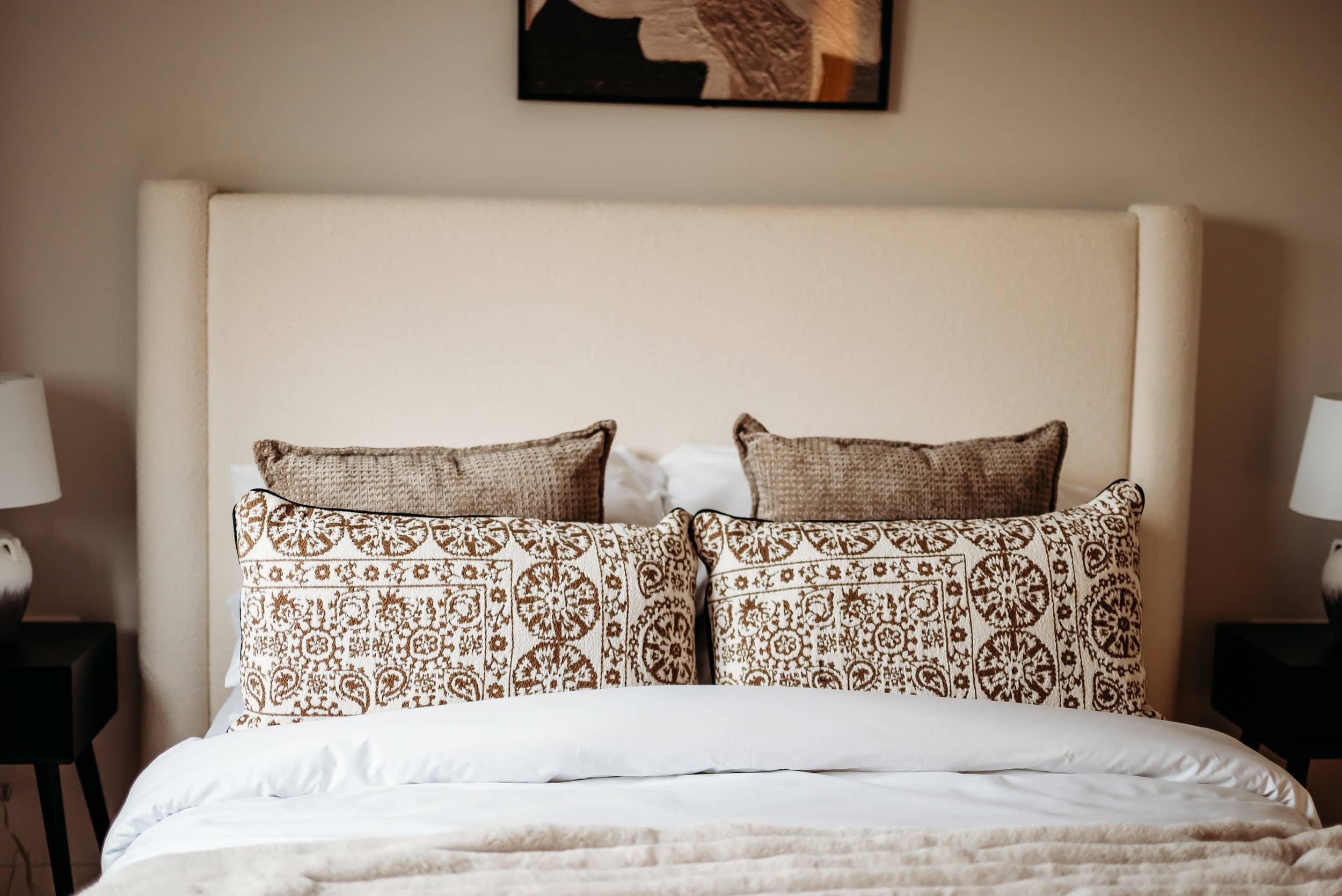
- simple hotel-style bedding in white or light neutral
Even in a modest room, two bedside lights and a tidy headboard wall can shift the feel from “box room” to “retreat”.
Second bedroom: decide its job and stage it
This room often causes hesitation. You can remove doubt by choosing one clear use:
- home office with desk, chair, lamp, and a rug
- guest room with a double bed if it fits comfortably
- child’s room with a small bed and toy basket (keep it minimal)
Don’t stage it as “half office, half gym, half storage”. Buyers see confusion as cost.
Kitchen and dining: don’t ignore the lifestyle cues
You don’t usually rent full kitchens, but small staging choices matter:
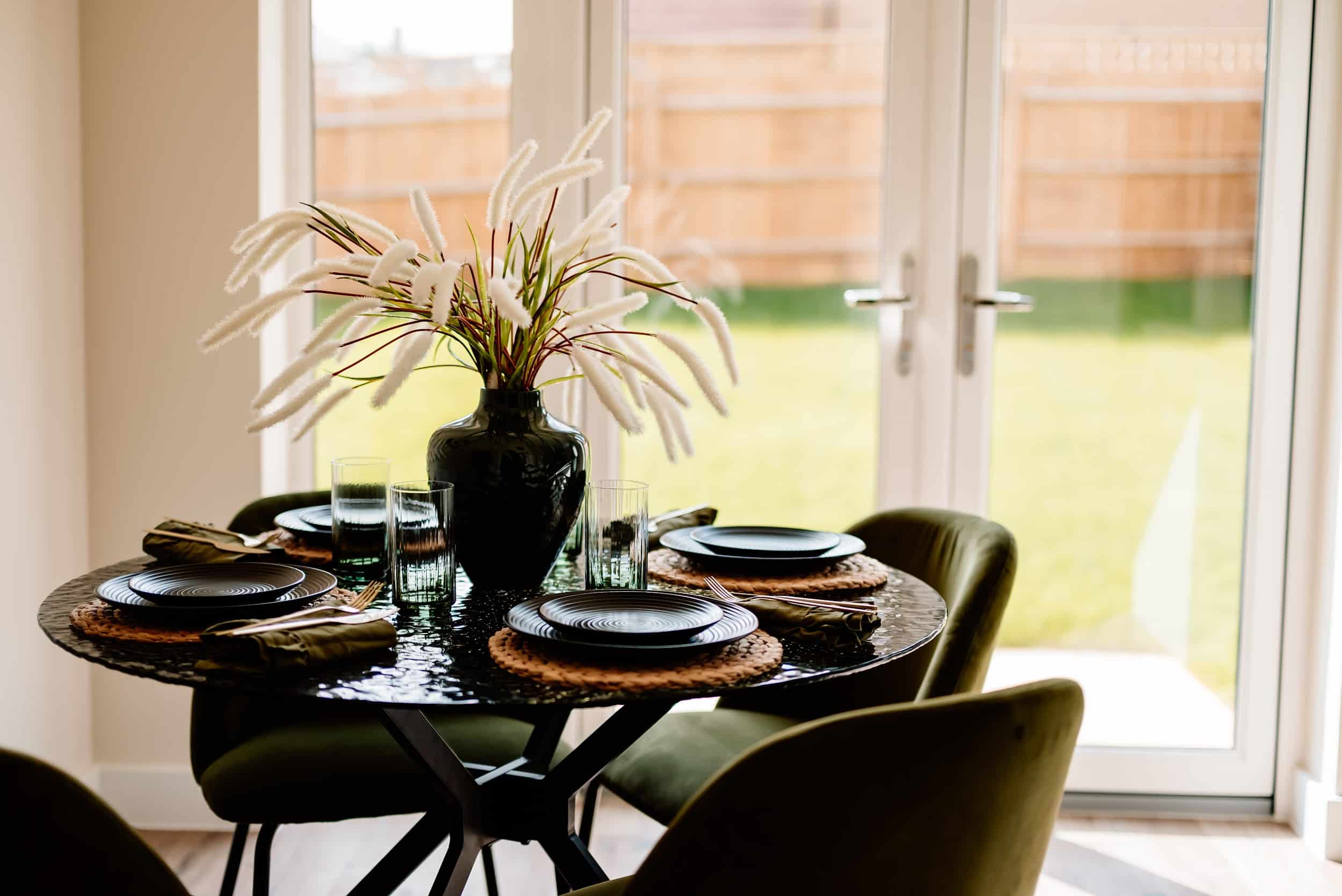
- set a simple table for two or four if you have dining space
- add a bowl of fruit, a chopping board, and a plant (real or high-quality faux)
- keep worktops clear so the kitchen looks larger
Hallway: remove the ‘empty echo’ feeling
A narrow console table, a mirror, and one statement piece (art or a vase) can turn the entrance from “blank corridor” into “welcome home”. It’s also one of the cheapest staging wins per pound spent.
Styling Choices That Photograph Well And Appeal To More Buyers
A property can look great in person and still photograph badly. The camera flattens space, exaggerates contrast, and punishes clutter. Styling for photos is a specific skill, and it’s one of the main reasons home staging changes enquiry levels.
Choose neutral, but not bland
Neutral sells because it widens appeal, but “all grey everything” can feel tired in 2026. We aim for:
- warm neutrals (oat, cream, soft stone)
- one accent colour used lightly (sage, navy, terracotta)
- natural texture (wood, linen-look fabrics, woven baskets)
A simple example: cream sofa + oak coffee table + black metal floor lamp + two sage cushions. It reads modern, but it won’t scare off buyers who hate trends.
Get the proportions right (the hidden photo trick)
Photos love balance. Use:
- larger artwork rather than lots of small frames (one statement piece above the sofa)
- curtains that sit wide of the window so you don’t block light
- a rug that anchors the seating area
If you do one thing, do this: keep the floor visible around furniture. That visible “breathing space” makes rooms look bigger.
Light the property like a human, not a showroom
UK light can be flat, especially in north-facing rooms. We use three layers:
- ceiling light (clean shade, warm bulb)
- table/floor lamps (warm pools of light)
- daylight (windows clear, blinds tidy)
For photography, turn on lamps even during the day. It lifts the mood in the shot and reduces harsh shadows.
Aim for broad buyer appeal
We avoid polarising statements that narrow the market: oversised slogans, niche artwork, or anything that dates quickly. Instead, we use simple cues that fit most lifestyles, like a dining setup that suggests a relaxed weeknight meal or a desk that signals work-from-home without looking corporate.
Alternatives To Rental Staging: When Other Options Make More Sense
Sometimes renting furniture is the right idea at the wrong time. If the numbers don’t stack up or the property has different constraints, there are sensible alternatives that still improve saleability.
Option 1: Light-touch styling using what you already own
If you live in the property and the big pieces are decent, you may not need a full furniture rental package. Instead:
- remove 30–50% of visible items (books, toys, extra chairs)
- swap heavy curtains for lighter window dressing
- add two or three key upgrades: a larger rug, matching bedside lamps, and better bedding
This works well when the issue is clutter and weak photography, not empty rooms.
Option 2: Buy-to-stage (only when the timeline is long)
Buying furniture can make sense if:
- you’re marketing a show home or repeated developments
- you expect a long sales window and would otherwise pay many months of rental
- you have storage and a plan for resale or reuse
The risk: you become responsible for delivery, assembly, styling, and then disposal. That time cost is real, especially if you’re juggling a move.
Option 3: Virtual staging (use with care)
Virtual staging can help when budget is tight, but it has limits:
- it can disappoint viewers if the real property looks stark compared to photos
- it doesn’t fix scale in real-life viewings
- some buyers feel misled if the images look heavily altered
If you use it, we’d keep it subtle and ensure the listing states that images are virtually staged.
Option 4: Price and presentation strategy instead of staging
In some cases, the best move is honest positioning: a sharper asking price, clear messaging about refurbishment potential, and a strong agent strategy. Presentation still matters (clean, bright, no odours), but you may not need rented furniture.
If your main goal is to improve the chance of competitive bidding, it’s also worth reading how to sell over asking with the right strategy, because staging is most powerful when it supports a well-planned launch.

Conclusion
If we want a property to sell quickly, we have to make it easy for buyers to picture their life there. Home staging furniture for rent can do that faster than redecorating, and often for less stress than buying and moving furniture around.
The smart approach is simple: pick the right rooms, check the contract details, and prepare the home so the staging looks intentional in photos and viewings. Done well, staging doesn’t just make a place look nicer, it reduces doubt, supports stronger offers, and helps you control the timeline instead of reacting to it.
Frequently Asked Questions about Home Staging Furniture for Rent
What are the benefits of renting home staging furniture in the UK?
Renting home staging furniture enhances property appeal by improving room scale, reducing buyer uncertainty, and elevating photos without costly renovations. It accelerates sales and can increase offers by up to 8%, making your home easier to sell or let.
How does the home staging furniture rental process typically work?
UK staging companies usually start with a remote assessment using floor plans or photos, provide a tailored package proposal, deliver and install furniture within 7–10 working days, and offer flexible rental terms including extensions during marketing.
When might renting staging furniture not be the best option?
Renting may not suit homes already well-furnished, properties needing renovation where staging distracts, or situations with complex access and unpredictable timelines that cause costly rental extensions.
What costs and hidden fees should I watch for with staging furniture rental?
Typical UK prices start around £1,900 per month for small packages but beware of minimum terms, extension fees, damage liabilities, and extra charges for stairs, timed delivery, or cleaning on return. Always clarify contract details before signing.
Which rooms should I focus on for staging if I have a limited budget?
Prioritise key rooms like the living room, main bedroom, and second bedroom or home office. These areas influence buyer decisions most, helping reduce doubt and improve the property’s perceived usability and feel.
Are there alternatives to renting staging furniture for sale properties?
Yes. Alternatives include light-touch styling using your own furniture, buying furniture to stage for long-term use, virtual staging for budget constraints, or focusing on pricing and presentation strategies instead of furniture rental.