
We all know the moment: the doorbell is due any minute, and the house suddenly looks like it hosted a small tornado. That’s when we do what many of us pretend we never do, stuff the clutter out of sight, swipe the kitchen sides, and hope nobody opens that cupboard. The scurryfunge meaning captures that exact, very human dash to make things look presentable right before guests arrive.
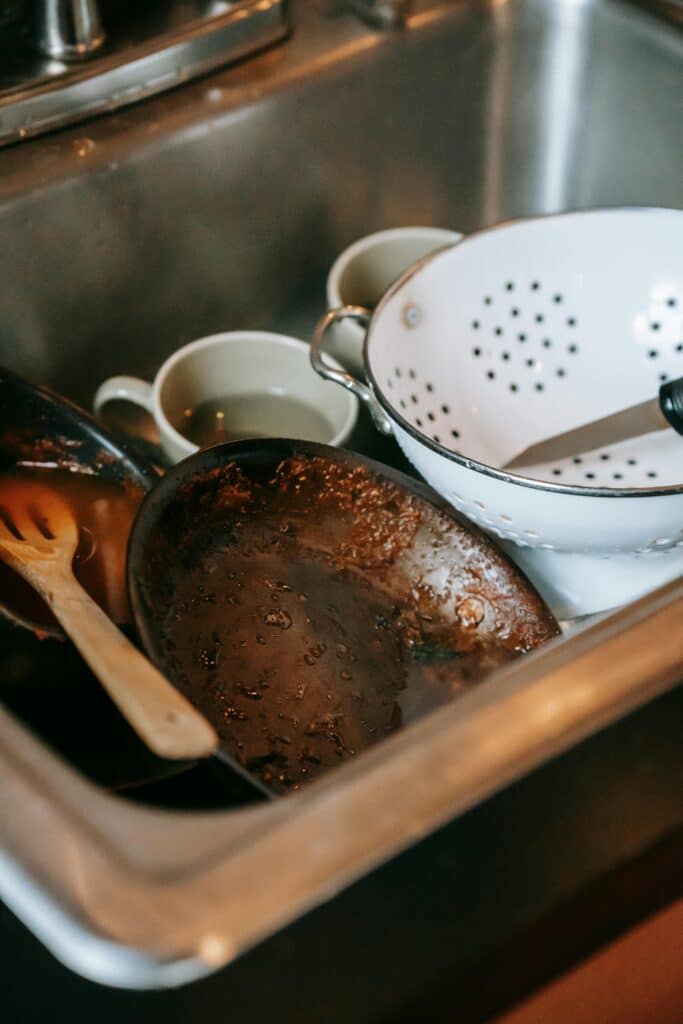
Key Takeaways
- The scurryfunge meaning refers to the sudden, hurried tidying of a home just before guests arrive, prioritising visible cleanliness over thoroughness.
- Scurryfunge combines quick movement (‘scurry’) with fussing or rearranging (‘funge’), perfectly capturing the frantic rush to appear presentable under time pressure.
- This word highlights the common social anxiety around hosting and managing impressions in domestic spaces, especially in the UK.
- Scurryfunge differs from related terms like ‘panic clean’ or ‘scurry’ by specifically involving a last-minute, appearance-focused tidy triggered by visitors.
- A practical scurryfunge involves quickly clearing entryways, wiping kitchen surfaces, and freshening bathrooms, often utilising a ‘doom basket’ to hide clutter temporarily.
- Using ‘scurryfunge’ in casual or light professional contexts can add humour and relatability to descriptions of last-minute preparation tasks.
What Does “Scurryfunge” Mean, Exactly?
Someone texts, “We’re five minutes away,” and your brain does instant maths: shoes by the door, mugs on the table, post on the stairs, laundry you swore you’d fold. Scurryfunge is the verb for that sudden burst of frantic tidying when visitors are on their way, usually unexpected, and usually done at speed.
In plain terms, the scurryfunge meaning is: to rush around hastily cleaning or straightening the house before someone arrives. It’s not a calm, Saturday-morning deep clean. It’s the short, sharp sprint where you prioritise what can be seen over what’s actually clean. The “tactics” are familiar:
- You clear surfaces because they’re in eye-line the second someone steps in.
- You hide mess in a bedroom, cupboard, or bag because it’s faster than sorting it.
- You do a quick bathroom check (fresh towel, loo roll, wipe the sink) because that’s where people judge you.
The word is funny because it’s accurate. A scurryfunge is rarely thorough, but it’s oddly strategic. We don’t mop behind the sofa: we move the pile of unopened letters so the hallway looks calm. We don’t reorganise the pantry: we wipe the counter so it looks like we have our lives together.
There’s also a social subtext baked into the word. Scurryfunging isn’t just cleaning, it’s image management. It happens when we think we might be assessed, even gently, by a neighbour dropping something off or friends popping in after school pick-up.
One important nuance: scurryfunge is about time pressure. If you tidy because you enjoy it, that’s not scurryfunging. If you tidy because you’re slightly panicked and you can hear a car door slam outside, now we’re talking.
How To Use “Scurryfunge” In A Sentence (Without Sounding Forced)
You’ve learned the word, you love the word, and now you want to use it, without sounding like you swallowed a Victorian dictionary. The trick is to put “scurryfunge” in everyday situations where people instantly recognise the behaviour, even if they’ve never heard the term.
Here are natural ways to use it in conversation or writing:
Keep it tied to a real trigger
A scurryfunge usually has a catalyst: a text, a knock, a delivery, a last-minute plan.
- “Mum rang to say she was nearby, so we had a five-minute scurryfunge before she arrived.”
- “We did a quick scurryfunge when the estate agent called and said they could come early.”
That second example lands well because property viewings create the same pressure as guests: you’re not cleaning for comfort, you’re cleaning for judgement.
Use it as a noun or a verb
In modern usage, people often use it as a noun (“a scurryfunge”) even though it’s traditionally a verb (“to scurryfunge”). Both sound normal in practice.
- Verb: “We scurryfunged the kitchen and pretended the rest of the house didn’t exist.”
- Noun: “Give me ten minutes for a scurryfunge and then come in.”
Pair it with a small, vivid detail
A single concrete detail makes the sentence feel human rather than performative.
- “I shoved the laundry basket in the wardrobe and did a scurryfunge before the neighbours popped round.”
- “We did a scurryfunge, wiped the hob, hid the recycling, and lit a candle like that fixes everything.”
Use it gently at work (yes, really)
Even in a professional setting, it can work as light shorthand for “last-minute tidy-up”, especially if you’re describing preparation.
- “Let’s do a quick scurryfunge of the meeting room before the client arrives.”
- “I had to scurryfunge my notes before the call, my desk was chaos.”
If we’re writing for a professional audience, we’d keep it occasional. The charm is in the surprise: repeat it too often and it stops feeling clever.
When not to use it
If the tone is serious, bereavement, complaints, formal client communications, it can read flippant. Save it for friendly emails, social posts, or informal storytelling where the reader can smile and recognise themselves.
Where Did “Scurryfunge” Come From? Origins, Etymology, And Early Mentions
Words like this don’t usually survive unless they describe something people keep doing. And scurryfunging, frankly, is evergreen. But the origins of “scurryfunge” are a bit messy, appropriately so.
A dialect word with a complicated paper trail
“Scurryfunge” is widely recorded as a British dialect term. Many sources point to older forms and regional usage rather than a neat “invented on this date” origin. That means we don’t get a single clean origin story: we get clues.
What we can say with confidence is that the word has been attested in print going back a long way, with meanings that shifted over time. Early mentions lean towards senses like beating/lashing or scrubbing/rubbing, which makes sense as a physical action word. Later, the meaning most people care about today appears: rushing around tidying when someone is about to arrive.
That shift is typical of living language. A word that starts with a general “rough cleaning action” can easily become “a hurried tidy”, especially when the emotional context (mild panic) becomes part of how people use it.
The likely blend: “scurry” + “funge”
When people try to unpack the word, they often split it into two intuitive parts:
- Scurry: to move quickly with nervous energy, like you’re darting from room to room.
- Funge: recorded in some dialect sources with a sense connected to changing, shifting, or fussing things about (and in some discussions, linked to tidying).
Put together, you get something that sounds almost onomatopoeic: scurry-funge. It feels like the action it describes, quick feet, flapping hands, vague stress.
Variant spellings and regional survival
One reason the etymology looks “unclear” is that dialect words often show up with variant spellings. You may see forms like scurrifunge, which suggests the word travelled by speech first and standard spelling later (if at all).
There’s also a fascinating twist: the term has been noted as surviving in dialect outside Britain too, including Newfoundland English in some records. That kind of linguistic “echo” happens when communities carry older speech patterns with them and keep them alive long after they fade elsewhere.
A practical takeaway (and why it matters)
If you’re using the word today, you don’t need to footnote the etymology in conversation. But it’s useful to know the shape of its history because it explains why the word feels so right. It didn’t emerge from a marketing meeting. It emerged from lived domestic life, people rushing, fussing, wiping, hiding evidence, and doing it often enough that someone, somewhere, coined the perfect sound for it.
Scurryfunge Vs Similar Words: “Scurry,” “Funge,” “Scurry About,” And “Panic Clean”
If you’ve ever said, “Sorry about the mess,” while discreetly kicking toys under the sofa, you already understand the concept. The question is whether “scurryfunge” adds anything beyond words we already use. It does, and the differences are worth knowing if we want to use it precisely.
“Scurry”
Picture the movement: quick steps, short tasks, constant switching.
- Meaning: to hurry with small, rapid movements.
- What it misses: scurrying can happen for any reason, catching a train, answering the phone, grabbing a charger.
Scurry is the motion. Scurryfunge is the motion plus the domestic mission.
“Funge”
This one is less familiar, which is why “scurryfunge” feels like a complete unit rather than something you consciously assemble.
- Meaning (in dialect discussions): linked to shifting, fussing, or changing things about: sometimes connected to tidying.
- What it adds: the sense that you’re not calmly organising, you’re moving things fast to create the appearance of order.
If scurry is the speed, funge is the fussing rearrangement.
“Scurry about”
This is what we say when someone looks busy but we’re not sure what they’re achieving.
- Meaning: to rush around in a slightly disorganised way.
- What it misses: it doesn’t specify cleaning.
You can scurry about looking for your keys. You scurryfunge when you’re making the front room look “fine” before someone steps in.
“Panic clean”
This is the modern, internet-friendly phrase. It’s close, but not identical.
- Meaning: a frantic cleaning burst driven by pressure or anxiety.
- Where it differs: “panic clean” can include deeper cleaning (like scrubbing the shower) and can happen even if nobody is coming, some people panic clean before a stressful deadline because cleaning feels controllable.
Scurryfunging is typically visitor-triggered and appearance-led. You prioritise what someone will notice in the first minute: hallway, kitchen, bathroom, front room.
So which should we use?
Use scurryfunge when you want a word that captures all of this in one go:
- the time pressure (“they’re nearly here”),
- the social pressure (“they’ll see the mess”), and
- the selective tidying (“hide it now, sort it later”).
If we’re writing or speaking to a UK audience, the word also signals a certain shared cultural humour: we laugh because we’ve all done it, and we’ve all pretended we haven’t.
Why “Scurryfunge” Still Resonates: Social Etiquette, Hosting Anxiety, And Modern Life
A friend says, “We’re in the area, mind if we pop in?” and suddenly your home feels like a public document. That spike of urgency is exactly why “scurryfunge” still resonates: it names a modern feeling that sits at the crossroads of etiquette, anxiety, and the performance of having it together.

Hosting etiquette: the unspoken rules we still follow
Even though most of us say we don’t care about mess, we often act like we do, because we assume other people care. In the UK especially, hosting etiquette tends to include small, predictable signals:
- a clear place to put coats,
- a reasonably clean loo,
- a kitchen surface that looks “under control”,
- and the absence of visible chaos (even if it’s been relocated).
Scurryfunging is our quick way of meeting those signals. It’s not about perfection. It’s about avoiding embarrassment.
The real driver: hosting anxiety (and what it costs us)
The cost of hosting anxiety isn’t just a messy cupboard. It’s the mental load: the sense that our home reflects our competence.
In practice, that can look like:
- declining spontaneous visits because we don’t feel “ready”,
- over-apologising the moment someone arrives,
- cleaning in a rush that makes us snappy with partners or kids,
- or spending the visit half-distracted, thinking about the mess upstairs.
That’s why the word feels relieving. When we name the behaviour, we also normalise it. “I had a scurryfunge” is less self-judging than “my house was disgusting”. It reframes the moment as a common social reflex.
Modern life makes scurryfunging more likely, not less
You’d think tech would reduce pop-ins. In reality, it often compresses notice periods.
- Messaging makes last-minute plans easy (“we’re nearby”).
- Same-day deliveries create doorstep interactions.
- Hybrid work means colleagues, neighbours, and family assume you’re “around”.
And social media doesn’t help. If our baseline for “normal” is a perfectly staged living room, our actual living room can feel like a problem that needs solving in five minutes.
A practical, low-stress “scurryfunge plan” (that works)
When time is tight, a plan beats frantic energy. Here’s a realistic approach many of us use, whether we admit it or not:
- Front path first: clear the hallway and any immediate trip hazards (shoes, bags, post). One visible improvement changes the whole impression.
- Kitchen reset: move clutter into one tray or bag, wipe the main surface, and deal with anything that smells (bins, leftover food).
- Bathroom check: wipe the sink, put out a clean hand towel, check loo roll. This takes two minutes and saves disproportionate embarrassment.
- The “doom basket” rule: keep one basket for fast hiding. If you scurryfunge often, make it a system: everything goes in the basket, and you sort it later.
Notice what’s missing: perfection. A scurryfunge is about good enough.
Why this word oddly suits a professional audience too
Even for readers focused on serious planning, money, family milestones, business responsibilities, the underlying theme is familiar: we all manage impressions under time pressure.
We prepare for meetings, tidy our inbox, organise paperwork before an important call. Domestic scurryfunging is the home version of that same behaviour: a quick reset to feel in control.
And if we’re honest, it’s also a reminder that humans often act before they think. That’s true in tidying, and it can be true in financial decisions as well. The more we recognise our “panic-driven” habits in small areas of life, the easier it is to build calmer routines in the bigger ones.
Conclusion
If we’ve ever sprinted round the house because someone was “just popping in”, we’ve lived the scurryfunge meaning, even if we didn’t have the word for it. “Scurryfunge” survives because it’s precise, funny, and a little too honest about how we handle social pressure. Next time you’re tempted to apologise for the mess, we can do something kinder: name the moment, do a quick reset, and remember that a home is meant to be lived in, not displayed.
Frequently Asked Questions about Scurryfunge
What does the word ‘scurryfunge’ mean?
Scurryfunge means to rush around hastily tidying or straightening a house just before unexpected visitors arrive, focusing on quick fixes rather than a thorough clean.
How can I naturally use ‘scurryfunge’ in everyday conversation?
You can use ‘scurryfunge’ as a verb or noun tied to real triggers, for example: ‘We did a quick scurryfunge before the guests came,’ or ‘Give me five minutes for a scurryfunge, and I’ll be ready.’ This makes it sound casual and relatable.
Where does the word ‘scurryfunge’ come from?
Scurryfunge likely blends ‘scurry’ meaning to move quickly, and ‘funge’ meaning to fuss or tidy. It is a British dialect word with roots back to the 18th century, evolving from meanings like beating or scrubbing to hasty tidying before visitors.
How is scurryfunge different from terms like ‘panic clean’ or ‘scurry about’?
Scurryfunge specifically refers to hurried tidying triggered by visitors’ imminent arrival, focusing on appearance. ‘Panic clean’ can be a deeper frantic clean driven by stress, and ‘scurry about’ means rushing around without necessarily cleaning.
Why does the concept of scurryfunge still resonate in modern life?
It captures the common social anxiety about hosting unexpectedly, where quick tidying is part image management. With spontaneous visits and online messaging, scurryfunging remains relevant as a natural social reflex.