
A buyer decides how they feel about a home in minutes, and that snap judgement often comes down to one thing: how the rooms read at a glance. If a space looks tight, dark, or awkward, people assume the whole property will be hard work. In this guide, we show how staging rooms makes every room feel simpler to live in, easier to move through, and easier to say “yes” to.
Key Takeaways
- Staging rooms helps buyers quickly envision living in the space by clarifying function, improving perception of size, and reducing perceived risks.
- Start room staging with an audit to fix maintenance issues, improve furniture flow, and establish a clear focal point to enhance comfort and visual appeal.
- Declutter while maintaining a lived-in feel by removing personal items and excess clutter, especially in visible storage and flat surfaces, to create a calm and organised environment.
- Design furniture layout to support easy movement and sightlines during buyer walkthroughs, ensuring doors open freely and key features are highlighted.
- Enhance rooms with balanced lighting, consistent neutral colours, controlled textures, and strategically placed mirrors to make spaces feel brighter and larger.
- Prioritise staging the living room, kitchen and dining area, main bedroom, and bathroom for the greatest impact on buyer confidence and offers.
What A Staging Room Is (And Why It Works On Buyers)
A viewing is not a design review: it is a confidence check. Buyers walk in and ask themselves, often silently, “Will my life fit here?” A staging room is a space arranged to answer that question quickly, with less effort from the buyer and fewer doubts for them to hold on to.
In practical terms, staged rooms use furniture placement, lighting, colour, and small styling choices to do three jobs at once:
- Clarify function (this is a dining area, not a dumping zone)
- Improve perception of size (the room feels wider because the layout breathes)
- Reduce risk (nothing looks broken, neglected, or expensive to fix)
Home staging works because it removes friction. If a buyer has to redesign the lounge or mentally guess where a table goes, they start bargaining with themselves. And bargaining leads to lower offers.
You will see a lot of claims online about staged homes selling faster and for more. The numbers vary by market and source, but the direction is consistent: staged homes tend to attract more interest and smoother negotiations because photos perform better and viewings feel more decisive. We treat that as the real goal of home staging: not just “pretty”, but clear, liveable, and low-risk.
If you want a quick reference point for why this matters, our explanation of why stage a home before selling is a useful grounding in the buyer psychology behind it.
And if you are thinking, “We are not trying to create a magazine house,” good. The best staging room is the one that looks like normal people could live in it without trying too hard, just with better flow, better light, and fewer distractions.
Start With A Room-By-Room Audit: Fixes, Flow, And Focal Points
Most staging problems are not styling problems: they are maintenance and layout problems. A buyer will forgive an older kitchen, but they will not forgive a sticky door, a cracked socket, or a room that feels cramped because furniture blocks the route.
We start with a quick audit that you can do in one evening with a notebook and your phone camera.
Step 1: List “silent deal-breakers” (15 minutes per room)
Walk in, stand still, and scan like a stranger. Write down anything that signals hassle:
- A wobbly bannister, stiff handles, squeaky hinges
- Scuffed skirting boards, chipped paint on door frames
- Loose curtain rails, blown bulbs, limescale around taps
- Overstuffed wardrobes that make a bedroom feel short on storage
Pick three fixes you can complete cheaply in a weekend. A £6 tub of filler and a small tin of paint can remove the “this needs work” feeling that often triggers price negotiations.
Step 2: Map the flow (use a simple walkway rule)
A common reason rooms photograph badly is blocked movement. Aim for a clear path you can walk without turning sideways. As a rule of thumb:
- Keep main walkways around 75–90cm where possible
- Avoid placing furniture so doors hit it or drawers cannot open
- Move floor lamps, baskets, and plant stands out of pinch points
A simple example: if the only route into the living room squeezes between a sofa arm and a coffee table, the room reads smaller than it is. Shift the coffee table, swap it for a slimmer one, or centre it differently. That one change often improves both comfort and photos.
Step 3: Choose one focal point per room
Every staging room needs one clear “anchor” so buyers know where to look first. Pick what the room already offers:
- A fireplace, bay window, or garden doors
- A headboard wall in a bedroom
- A dining table under a pendant light
Then arrange furniture to support it, not compete with it. If the focal point is the window, do not put a tall bookcase half in front of it.
If you want a broader view of how to make your property stand out before it hits the portals, this guide on how to stand out in the property market pairs well with a room-by-room staging audit because it tackles the “first impression” factor from the listing onwards.

Declutter Without De-Personalising: The Sweet Spot For Lived-In Homes
Nothing kills a viewing faster than a room that makes buyers feel like they are intruding. But a room that feels sterile can also backfire, especially in family homes where warmth matters. The sweet spot is “lived-in, but effortless”. That is where staging pays off.
We use a simple three-box method that keeps momentum and avoids decision fatigue.
The three-box method (keep it moving)
Take three large boxes or bags and label them:
- Store (keep, but not for viewings)
- Donate/Sell (good items that do not earn their space)
- Bin/Recycle (broken, expired, unmatched)
Set a timer for 20 minutes per room and start with flat surfaces. If you do only one thing, clear these first:
- Kitchen worktops (leave one intentional item, like a fruit bowl)
- Bathroom edges (remove extra bottles, razors, and half-used products)
- Bedside tables (one lamp, one book, nothing more)
Concrete tip: aim for one-third empty on shelves and sideboards. That space reads as storage and calm, which buyers link to “this house is organised”.
Keep “safe” personality, remove “specific” personality
Buyers struggle when they see too much of your life. Remove or reduce:
- Personal photos on walls and fridge doors
- Children’s artwork clustered in one spot (keep one or two pieces, not a gallery)
- Collection displays that dominate a room (for example, 40 figurines on open shelving)
But keep warmth through simple touches:
- A throw folded over the sofa arm
- Two matching cushions, not six mismatched ones
- A small plant near a window with clean leaves and a neutral pot
Where clutter hides (and buyers always open it)
A common mistake in home staging is focusing only on what buyers see. Buyers open things. So we also thin out:
- Coat cupboards (limit to a few matching hangers and current-season coats)
- Under-sink cupboards (remove spare cleaning bottles and loose bags)
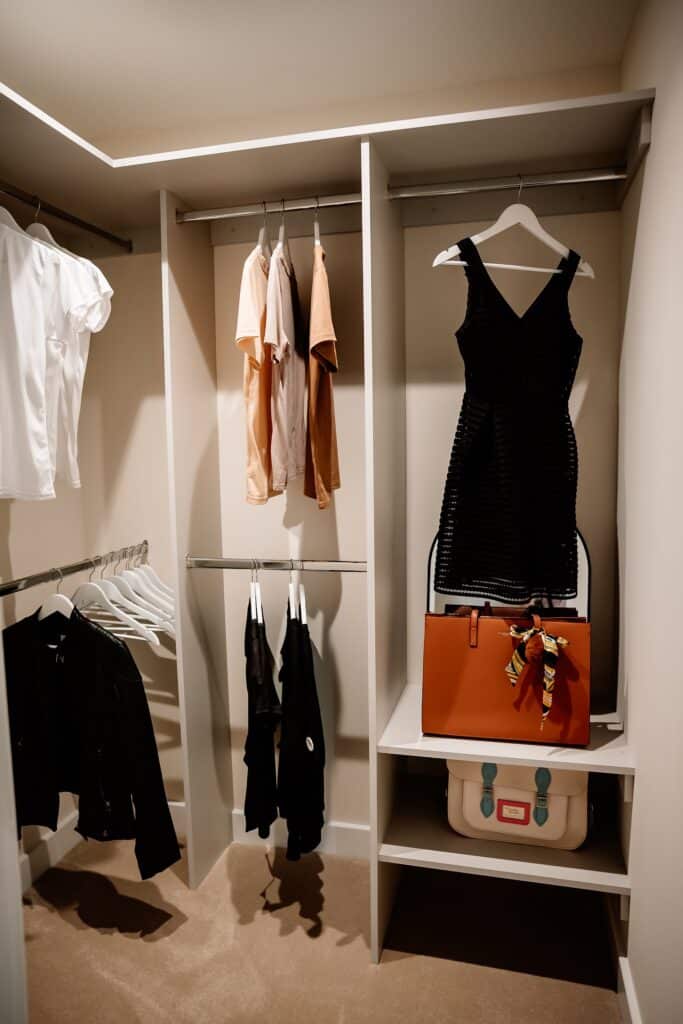
- Bedroom wardrobes (edit by colour, leave space between items)
An easy example: if a wardrobe rail bows under weight, the buyer does not think “they have lots of clothes”. They think “storage is tight”. Make it look like you have room to spare.
Decluttering is not about hiding life: it is about making the buyer’s brain do less work. When your rooms feel calm, their attention moves to the things that sell the property: space, light, layout, and potential.
The Buyer’s Walkthrough: Layout, Sightlines, And Easy Movement
Viewings rarely follow your daily routine. Buyers create their own route, and they do it fast: front door, main reception room, kitchen, garden access, upstairs bedrooms, bathroom, then a second loop for “the bits we missed”. If your furniture fights that route, the home feels smaller and more awkward than it really is.
We stage for a walkthrough, not for how you sit on a Tuesday night.
Design the “first five steps” from each doorway
Stand in the doorway of every room and take a photo on your phone. That photo is close to what a buyer registers first.
Look for these issues:
- A chair back or tall plant blocks the view into the room
- A clutter pile sits on the first visible surface (for example, the sideboard)
- The most attractive feature sits off to the side, so it gets missed
Actionable fix: rotate the sofa or move one armchair so the first view shows open floor and a focal point. In many living rooms, pulling a sofa forward by 10–15cm creates a visible “border” behind it that makes the room feel wider.
Keep “door swing space” clear
Doors that hit furniture make rooms feel badly planned. Check:
- Bedroom doors that catch a chest of drawers
- Bathroom doors that hit the toilet or a storage unit
- Patio doors that cannot open fully because of plant pots or side tables
If a door cannot open cleanly, buyers assume the room is too tight. Move the furniture, even if it feels odd day to day, because you are staging for a short, high-stakes moment.
Create clear zones in open-plan spaces
Open-plan layouts can look brilliant, but they can also look like a furniture showroom that got mixed up. Buyers need clear zones:
- A rug to anchor the seating area
- A dining table positioned under the main light fitting
- A sideboard or console that signals a “wall” without blocking light
Concrete example: if your dining table floats in the middle of the room, push it closer to the kitchen side and leave a visible walkway to garden doors. That one decision often makes open-plan homes feel more expensive and deliberate.
Make it easy for groups
Buyers often arrive in twos or threes, and they pause to chat. Leave one spot in the living room where three people can stand without blocking a doorway. In small homes, that might mean removing one occasional chair and replacing it with a slim stool that can tuck away.
When staging rooms for movement, we are really doing one thing: we are removing micro-annoyances that make a buyer feel uncertain. Less uncertainty leads to stronger offers and fewer “we will think about it” endings.
Light, Colour, And Texture: Make Each Space Feel Bigger And Brighter
A dark room can be perfectly good in real life and still photograph like a cave. That matters because many buyers decide whether to book a viewing based on ten photos and a floorplan. Light, colour, and texture are the quickest levers we have in home staging, and they do not need a big spend.
Light: fix the basics before you add anything
Start with simple, concrete wins:
- Replace every blown bulb (buyers notice the one corner that looks “dead”)
- Use the same colour temperature within a room (warm white, not a mix of blue and yellow)
- Clean windows inside and out, especially on street-facing rooms
- Open curtains fully and remove heavy tie-backs that block glass
If a room has one ceiling pendant that leaves corners gloomy, add a second light source. A £25 floor lamp near a reading chair can make the whole room feel more balanced.
Colour: keep it consistent and calm
We are not trying to erase character: we are trying to reduce visual noise. A consistent palette helps rooms connect in the buyer’s mind.
Practical approach:
- Keep walls neutral if you can (soft white, warm greige, light stone)
- Use colour in accessories (cushions, towels, a single piece of art)
- If you have a bold wall, balance it with simple bedding and minimal prints
Concrete example: a bright red feature wall in a small bedroom often shrinks the space. Repainting it a soft neutral can make the room feel larger in photos and less polarising in person.
Texture: add comfort without adding clutter
Texture is the staging trick that makes a room feel “finished” even when it is simple.
Use two to three textures per room:
- A woven throw plus a smooth cushion
- Linen-look curtains plus a natural fibre rug
- Matte ceramics plus a glossy framed mirror
But keep it controlled. If every surface has a different texture, the room becomes busy again.
Mirrors: use them to move light, not to create chaos
Mirrors can double light, but only if they reflect something attractive.
- Place a mirror opposite a window to bounce daylight
- Avoid mirrors that reflect clutter piles, bins, or laundry baskets
- Choose a mirror that matches the scale of the wall (small mirror on a big wall looks lost)
When staging rooms, we treat light like a “trust signal”. Bright, even spaces feel cared for, and cared-for homes feel safer to buy. That emotional leap sounds small, but it affects how quickly buyers move from “nice” to “we should offer”.
Staging The Most Important Rooms
If time and energy are limited, do not spread yourself thin across every corner of the house. Buyers form their price expectations from a handful of rooms, and the rest simply needs to look clean, maintained, and coherent.
We prioritise staging rooms in this order for most homes:
- Living room (or main reception room)
- Kitchen and dining
- Main bedroom
- Main bathroom
- Hallway and landing (because they frame everything else)
A small, focused home staging push in those spaces often delivers the biggest impact on photos and viewing confidence. If you want proof that small changes can shift outcomes quickly, this case story about going from no viewings to a full price offer shows how presentation can change buyer behaviour without changing the property itself.
Living Room Staging: Conversation Zones, Scale, And Cosy Signals
A living room can look “fine” and still fail because the furniture tells the wrong story. A giant corner sofa in a modest room signals tight space, even if it is comfortable day to day.
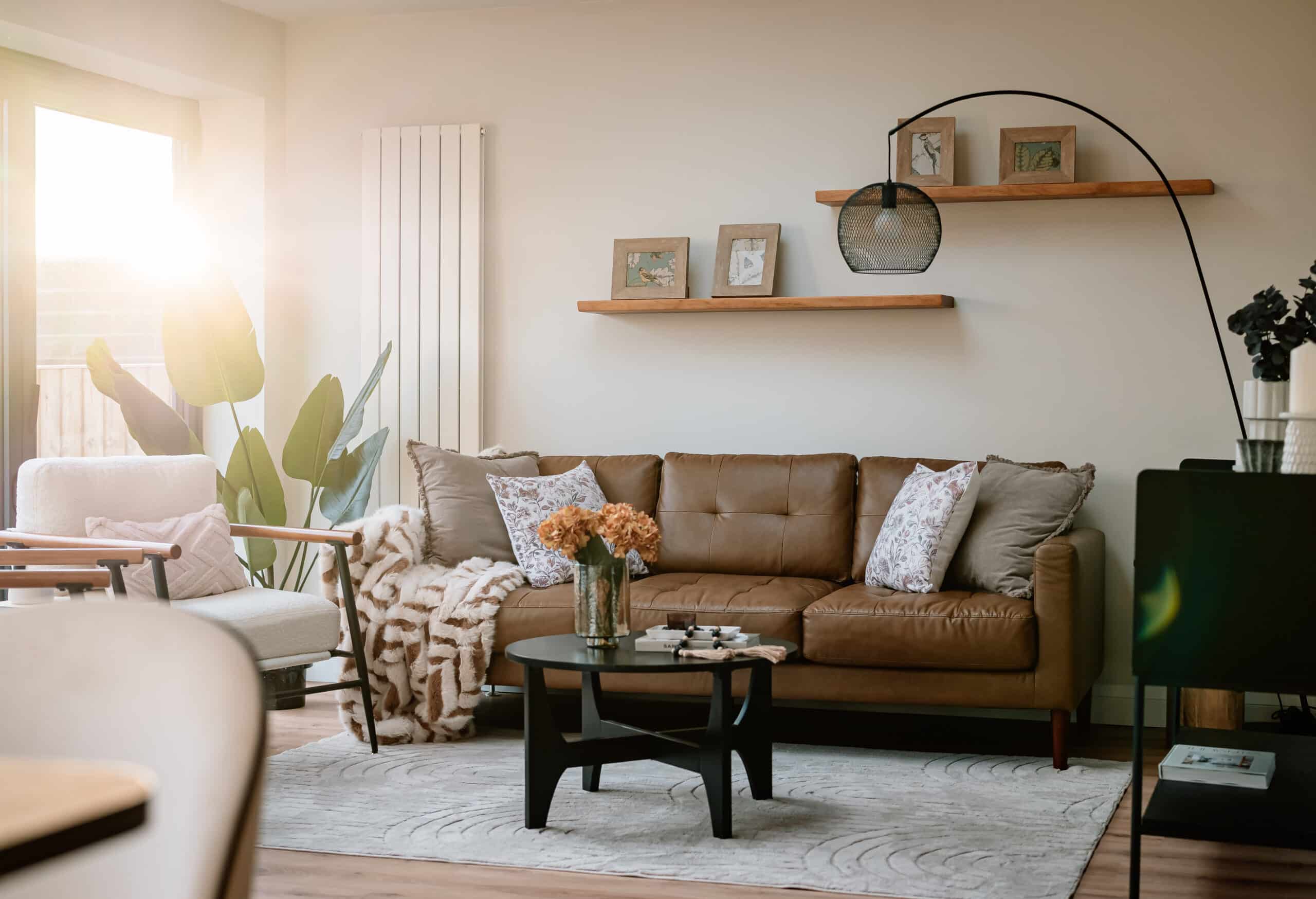
We stage living rooms by building one clear conversation zone:
- Place seating so people can face each other (sofa + two chairs, or sofa + chair + pouffe)
- Keep a visible route through the room (do not force people to squeeze past the coffee table)
- Use a rug to anchor the seating area (front legs of furniture on the rug works well)
Concrete example: if you have two sofas facing each other and the room feels crowded, remove one and replace it with two slimmer chairs. The room will look larger, and it will still feel sociable.
Add cosy signals without clutter:
- One throw, folded (not draped messily)
- Two matching cushions, plus one accent cushion for colour
- A simple coffee table vignette: a tray, one book, one candle (unlit)
Buyers do not buy your sofa. They buy the feeling that the room fits their routines: relaxing, hosting, and moving through the space without bumping knees.
Kitchen And Dining Staging: Clean Surfaces, Simple Styling, And Function
A kitchen sells “maintenance” as much as it sells cooking. Grime, limescale, and crowded worktops make buyers worry about hidden issues.
Start with a deep clean that targets buyer eyes:
- Degrease the extractor and hob area
- Remove limescale from taps and sinks
- Clean grout lines and replace mouldy silicone where needed
- Empty the bin and hide it out of sight if possible
Then simplify surfaces:
- Clear counters except for one or two purposeful items (kettle + canister, or a bowl of lemons)
- Remove fridge magnets and paper stacks
- Store dish racks during viewings so the sink area looks bigger
Dining spaces need function, even if you rarely use them. Set the table simply:
- A runner or placemats
- Two to four place settings (match the table size)
- A low centrepiece that does not block sightlines (small vase, not a tall bouquet)
Concrete example: if your dining area has become a home office, keep one slim laptop stand in a drawer and stage the table as dining. Buyers often down-value homes when they cannot “see” where meals happen.
Bedroom And Bathroom Staging: Calm, Hotel-Like, And Spotless
Bedrooms sell rest, and bathrooms sell hygiene. If either feels busy, buyers assume the whole home lacks storage and care.
Bedroom staging steps that work:
- Make the bed like a hotel: tight base layer, smooth duvet, two pillows per side if you have them
- Clear bedside tables to one lamp and one small item (a book or a small plant)
- Remove laundry baskets, gym gear, and charging cables from view
- If storage is visible, leave wardrobe doors closed and reduce what is on open shelves
Concrete example: if a box room is used as a child’s bedroom, keep one toy basket and one book stack, then store the rest. The room still reads as a bedroom, but it feels larger and calmer.
Bathroom staging is about “newness” without renovation:
- Replace the shower curtain if it is tired (cheap, high impact)
- Fold towels neatly and stick to one colour (white or light grey photographs well)
- Remove toothbrushes and half-used bottles during viewings
- Add one clean accessory, like a soap dispenser and a small plant
Spot-check the details buyers notice:
- Mirror streaks
- Toilet seat alignment
- Plugholes and drains
These are small, but they are powerful. When staging rooms makes bedrooms and bathrooms feel calm and spotless, buyers assume the rest of the house is equally well looked after, and they offer with fewer conditions.
Conclusion
Staging rooms is not about pretending your home is something it is not. It is about presenting each space so a buyer can understand it quickly, move through it easily, and trust that the home has been cared for. If we focus on flow, light, and a few high-impact rooms, we usually get better photos, better viewings, and more confident offers without spending a fortune. Start with the audit, fix the small friction points, then stage the living room, kitchen, and main bedroom as your priority, those rooms do the heavy lifting in almost every sale.
Frequently Asked Questions About Staging Rooms
What is the purpose of staging rooms when selling a home?
Staging rooms aims to present each space clearly and invitingly, helping buyers quickly understand the home’s function, perceive rooms as spacious, and feel confident it has been well cared for, which leads to stronger offers and faster sales.
How can I start staging my home effectively?
Begin with a room-by-room audit to identify quick fixes like repairing squeaky doors or chipped paint, then arrange furniture to create clear walkways and focal points, improving flow and making spaces feel larger and more welcoming.
Why is decluttering important in home staging, and how much is too much?
Decluttering reduces visual noise and helps buyers focus on the home’s strengths without feeling intruded upon. Aim for a balance where rooms feel lived-in but effortless, clearing about one-third of shelf and surface space while keeping some warm, simple personal touches.
Which rooms should I prioritise when staging my home?
Focus on the living room or main reception, kitchen and dining areas, main bedroom, main bathroom, and hallways or landings, as these spaces significantly influence buyers’ first impressions and price expectations.
How does lighting and colour impact the staging of rooms?
Good lighting and consistent, calm colour schemes make rooms feel brighter and bigger, enhancing photos and viewings. Use clean windows, matching lightbulbs, neutral wall colours, and add texture thoughtfully to create inviting, trust-inspiring spaces.
Can staged homes really sell for more and faster?
Yes, while exact figures vary, staged homes consistently attract more interest and smoother negotiations because they photograph better and help buyers visualise living in the property with less doubt and hesitation.